
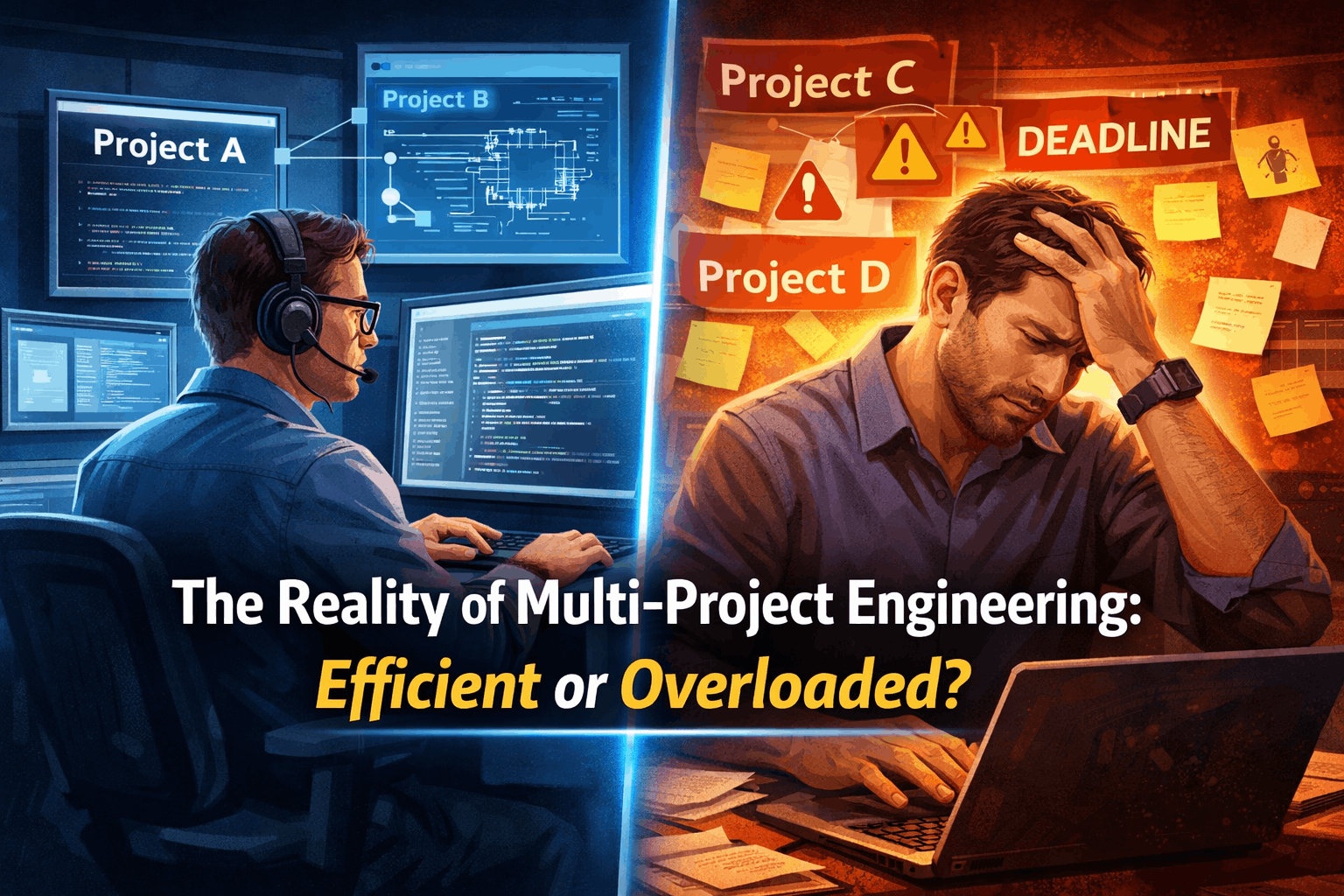
In today’s fast-moving technology environment, engineering organizations are constantly looking for ways to be more efficient without sacrificing quality. One strategy that often emerges, especially in contract software engineering, is assigning a single engineer to work across multiple projects simultaneously. On the surface, this approach can seem like a smart way to maximize talent and manage fluctuating workloads. But the reality is more nuanced.
When done well, multi-project engineering can increase flexibility, improve knowledge sharing, and help organizations respond quickly to changing client needs. When done poorly, it can create burnout, slow project timelines, and introduce risk into critical systems.
The key question isn’t simply whether engineers should work on multiple projects. The real question is: when does it work—and who can actually do it well?
Why Multi-Project Engineering Exists
In contract engineering environments, project workloads rarely move in perfectly predictable cycles. One project may require intense development for a few weeks and then shift into testing or integration, while another might need architectural planning or approvals before coding even begins. In many cases, the workload shift is simply the natural result of one project winding down while another is ramping up. Even after a project is considered complete, unexpected issues can surface, requiring members of the original engineering team to step back in and address latent bugs, integration challenges, or performance concerns.
Because of this natural ebb and flow, assigning engineers exclusively to a single project can sometimes leave valuable expertise underutilized. If a highly specialized engineer only has a few hours of work available in a given week, it makes sense to apply their skills elsewhere.
This is particularly common with roles such as:
- System architects
- Senior software engineers
- AI or machine learning specialists
- Cybersecurity engineers
- Embedded systems experts
These professionals often contribute most effectively in bursts, reviewing designs, solving complex problems, or implementing critical components, rather than writing code continuously for months at a time.
When managed properly, distributing their time across multiple projects allows organizations to deliver higher value to multiple clients simultaneously.
The Efficiency Advantage
There are several clear advantages to thoughtfully assigning engineers to multiple projects.
First, it allows organizations to leverage specialized expertise more effectively. Instead of dedicating a highly experienced engineer to a single project that may only need their advanced knowledge occasionally, that expertise can support several teams.
Second, it improves knowledge transfer across projects. Engineers who work on multiple systems often bring ideas, architectural patterns, and lessons learned from one project into another. This cross-pollination can lead to better designs and faster problem-solving.
Third, it creates greater resilience within engineering teams. When engineers are familiar with multiple projects, the organization becomes less vulnerable to unexpected disruptions. If one team suddenly needs support, someone already understands the system.
In contract engineering environments where client needs can change quickly, this flexibility can be a significant competitive advantage.
The Hidden Risks
Despite these benefits, multi-project assignments come with real risks.
The most obvious challenge is context switching. Software engineering requires deep concentration and mental continuity. When engineers must constantly move between codebases, requirements, and team discussions, productivity can decline.
Every project has its own architecture, terminology, development environment, and client expectations. Switching between them too frequently can introduce friction and increase the likelihood of mistakes.
Another risk is schedule misalignment. Two projects may both suddenly require urgent attention, perhaps due to a release deadline, unexpected bug, or client request. When the same engineer is critical to both efforts, competing priorities can emerge.
There is also the human factor. Even highly capable engineers have limits. Too many simultaneous responsibilities can lead to stress, fatigue, and ultimately burnout. When that happens, quality suffers and turnover risk increases.
For these reasons, multi-project engineering must be managed carefully and strategically.
Not Every Engineer Should Do It
One of the most important lessons many engineering leaders learn is that not every engineer thrives in a multi-project environment, and that’s perfectly okay.
Some engineers perform best when they can immerse themselves deeply in a single system for extended periods. They become experts in every corner of the codebase and deliver tremendous value through focus and consistency.
Others have a different skill set. These engineers excel at quickly understanding new systems, navigating unfamiliar architectures, and solving targeted problems across multiple teams.
The goal is not to force everyone into the same model. Instead, successful engineering organizations identify which individuals are best suited for multi-project work.
Traits of Engineers Who Thrive Across Projects
Engineers who succeed in multi-project environments tend to share several characteristics.
Strong architectural thinking.
Engineers who understand systems at a high level can move between projects more easily because they focus on core design principles rather than memorizing every implementation detail.
Excellent communication skills.
When working across multiple teams, engineers must clearly document decisions, explain trade-offs, and keep stakeholders aligned. Communication becomes just as important as coding ability.
Strong organizational habits.
Tracking tasks, documenting context, and maintaining clear notes are critical when juggling multiple responsibilities.
Confidence with ambiguity.
Multi-project engineers often step into unfamiliar situations and must quickly diagnose problems without complete information.
Experience.
Perhaps most importantly, experience matters. Senior engineers have seen more architectures, more failures, and more edge cases. This background allows them to adapt more quickly when shifting between systems.This is why organizations often rely on their most experienced engineers when distributing work across multiple projects.
How to Make Multi-Project Engineering Work
Organizations that succeed with this model tend to follow several practical guidelines.
First, limit the number of simultaneous projects. Two projects may be manageable; three may prove to be a real challenge for some. Situations like this should be closely monitored.. Beyond that, context switching often becomes inefficient.
Second, protect focused work time. Engineers should not be forced to switch contexts multiple times per day. Structured schedules, such as dedicating certain days or blocks of time to specific projects, can reduce cognitive overhead.
Third, ensure strong project management coordination. Project managers must communicate regularly so priorities remain clear and conflicts are resolved early.
Fourth, build documentation and knowledge sharing into the culture. This reduces the mental load required when returning to a project after time away.Finally, monitor workload carefully. Multi-project engineering should increase efficiency, not create hidden overtime.
Finding the Right Balance
At its best, multi-project engineering allows organizations to use talent more strategically, deliver expertise where it is needed most, and adapt quickly to changing client demands.
But it is not a universal solution.
The most successful engineering teams recognize that efficiency comes from balance—balancing focus with flexibility, specialization with collaboration, and workload with well-being.
Ultimately, the question isn’t whether engineers can work across multiple projects.
The real question is whether the organization has built the structure, leadership, and culture needed to make it sustainable.
Connect with us at https://iq-inc.com/connect-with-us/ or info@iq-inc.com to start the conversation.
#SoftwareEngineering #EngineeringLeadership #EngineeringManagement #SystemsEngineering #EmbeddedSystems #ContractEngineering #EngineeringConsulting #TechnologyConsulting #EngineeringServices