
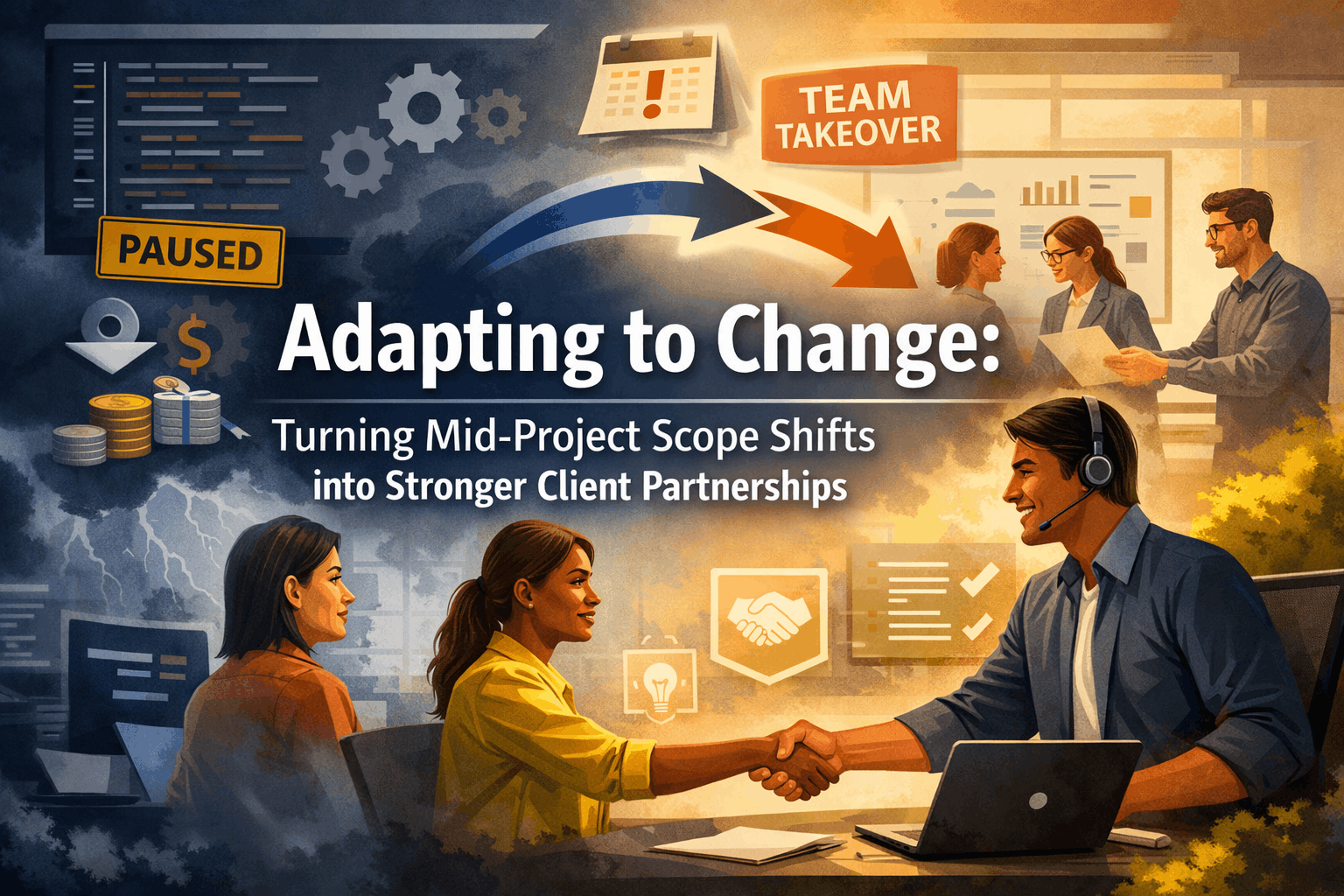
A Familiar Scenario
Everything is moving in the right direction. The project is on track, milestones are being met, and communication is flowing well. Then, something changes. Funding gets reallocated. Priorities shift. An internal engineering team wants to take over part of the work.
If you’ve worked in software engineering services long enough, you know this isn’t the exception, it’s the norm. The real question isn’t whether scope will change, but how you respond when it does.
The Reality of Contract Engineering Work
In contract software engineering, scope changes are a natural byproduct of how organizations operate. Business priorities evolve. Budgets tighten or get redirected. Leadership teams adjust strategies based on new information.
Some of the most common drivers of mid-project changes include:
- Internal funding shifts or budget constraints
- Changing product or business priorities
- Accelerated or delayed timelines
- Internal engineering teams stepping in to own more of the work
These changes are rarely about the quality of the work being delivered. More often, they reflect broader organizational dynamics. Recognizing this early helps avoid taking changes personally and keeps the focus where it belongs, on finding the best path forward.
Where Things Go Wrong
Scope changes can quickly strain a relationship if handled poorly. One of the most common missteps is becoming overly rigid, leaning too heavily on the original contract without acknowledging the client’s evolving situation.
Another pitfall is reacting defensively. When teams feel that work is being taken away or reduced, it can create tension that shows up in communication. Instead of collaboration, conversations become transactional or, worse, adversarial.
Lack of transparency can also create problems. If impacts on timelines, cost, or delivery aren’t clearly communicated, trust erodes quickly.
In most cases, it’s not the scope change itself that damages the relationship, it’s how both sides respond to it.
Reframing Scope Changes as Opportunities
While scope changes can feel disruptive, they are often pivotal moments in a client relationship. These are the points where you move beyond being a vendor and demonstrate what it means to be a true partner.
Handled well, a mid-project shift is an opportunity to show flexibility, professionalism, and a genuine understanding of the client’s business challenges. It’s a chance to reinforce that you’re aligned with their success, not just the statement of work.
Teams that embrace this mindset tend to stand out. They’re the ones clients remember and return to—not because everything went perfectly, but because they handled change effectively when it mattered most.
A Practical Approach to Handling Scope Changes
Seek to Understand First
Before reacting, take the time to understand what’s driving the change. Is it budget pressure? A shift in strategic priorities? Internal team availability? The better you understand the “why,” the more effectively you can respond.
Stay Transparent and Professional
Acknowledge the realities of the contract while maintaining a collaborative tone. Clearly communicate the impact of changes on scope, timeline, and cost. Transparency builds trust, even in difficult conversations.
Offer Options, Not Obstacles
Rather than focusing on what can’t be done, present viable paths forward. This might include adjusting scope, breaking work into phases, or supporting a transition to the client’s internal team. Giving clients options reinforces that you’re solution oriented.
Protect the Relationship, Not Just the Contract
It’s easy to focus on preserving every aspect of the original agreement. But long-term partnerships are built on trust and flexibility, not rigid enforcement. Sometimes a short-term concession leads to a much stronger long-term relationship.
Be Prepared to Flex
In some cases, the best move is to step back, whether that means reducing scope or transitioning work entirely. While it may feel counterintuitive, supporting the client’s needs in the moment often creates future opportunities.
Real-World Scenarios
These situations show up in many forms. A project may lose part of its funding halfway through, requiring a shift to a smaller, more focused scope. In another case, a client’s internal engineering team may be ready to take ownership of a portion of the system, creating the need for structured knowledge transfer.
There are also times when timelines change significantly, either accelerating or slowing down, forcing a rethinking of delivery plans.
In each of these scenarios, success isn’t defined by sticking rigidly to the original plan. It’s defined by how effectively the team adapts while maintaining trust and forward momentum.
The Long-Term Payoff
Handling scope changes well doesn’t just solve an immediate problem—it builds credibility. Clients remember the partners who stayed steady, communicated clearly, and worked with them through uncertainty.
Over time, this approach leads to stronger relationships, repeat business, and a reputation for being easy to work with—even in complex situations. It shifts the perception from “vendor” to “trusted partner,” which is where the most meaningful opportunities come from.
Closing Thought
In contract software engineering, change is inevitable. Projects evolve, priorities shift, and unexpected challenges arise.
What defines a partnership isn’t the absence of these changes, it’s how they’re handled. The teams that succeed are the ones that adapt, stay focused on the bigger picture, and consistently act in the best interest of the relationship.
Because in the end, it’s not the change that matters most, it’s how you respond to it.
Connect with us at https://iq-inc.com/connect-with-us/ or info@iq-inc.com to start the conversation.
#ArtificialIntelligence #AIinEngineering #EngineeringDiscipline #SoftwareEngineering #SystemsEngineering #EmbeddedSystems #IndustrialAutomation #EngineeringLeadership #TechLeadership #AIAdoption #ResponsibleAI #DigitalTransformation #Innovation #EngineeringCulture #QualityEngineering #SafetyCritical #Automation #FutureOfWork #TechStrategy