
The Moment Everyone Recognizes
In many organizations, a familiar scenario plays out. A new initiative is announced. A strategy has already been approved. A platform or vendor may even be selected. A timeline is communicated to leadership or clients.
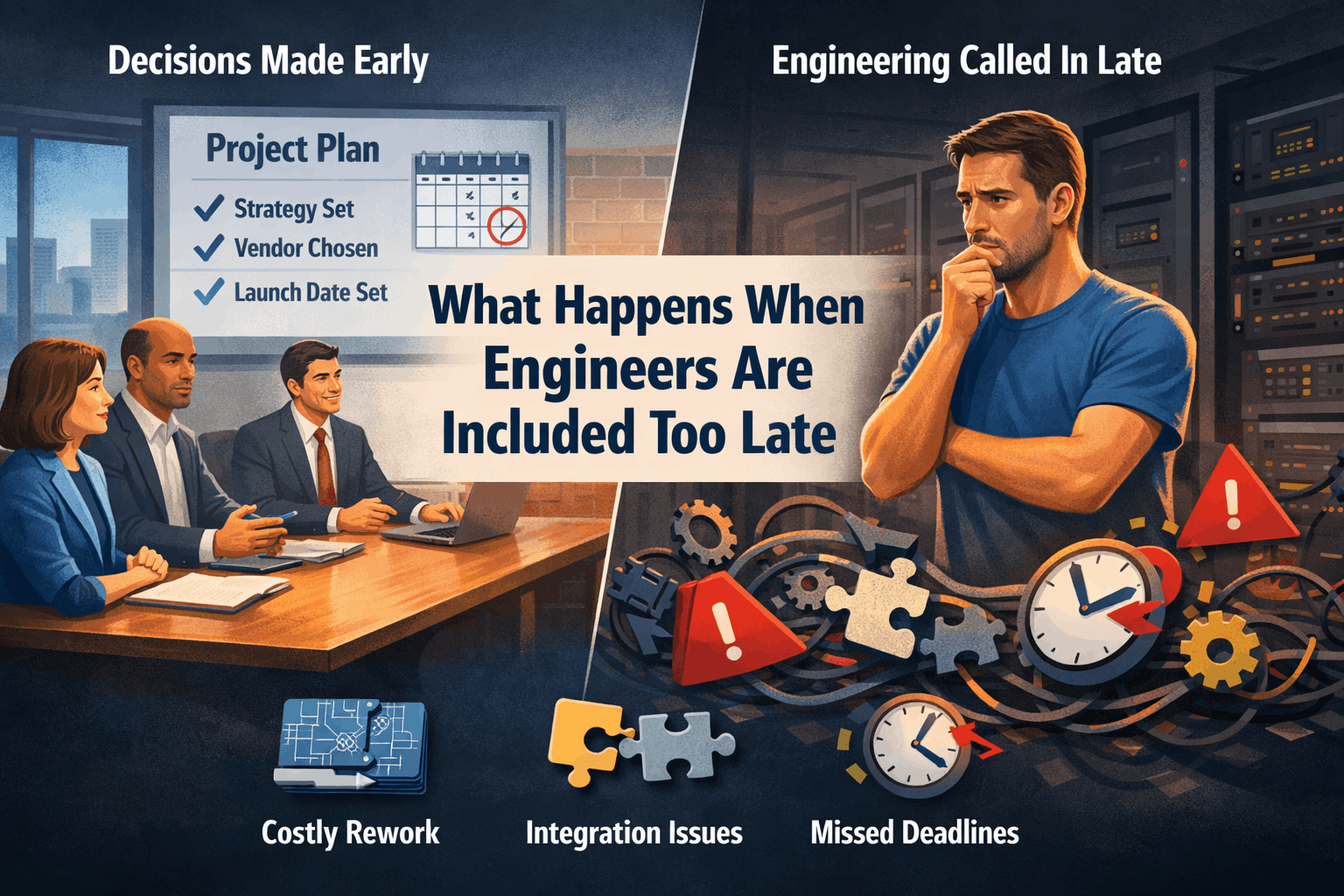
Only then does the conversation turn to engineering with a simple question: “How long will it take to build this?”
At that moment, engineering is no longer helping shape the solution. Instead, they are being asked to implement decisions that were made without full visibility into the technical implications.
This situation isn’t unusual. In fact, it happens frequently when organizations are moving quickly or trying to capitalize on new opportunities. But when engineering input is delayed, the costs of those early decisions often show up later, in schedule delays, increased complexity (which introduces a risk to quality), and additional expense.
The intent is usually speed. Ironically, the result is often the opposite.
Why This Happens
There are many reasons why engineering teams sometimes become involved only after key decisions have been made.
In some cases, strategic planning discussions are led primarily by business leaders focused on market opportunities, customer needs, or operational goals. These conversations are essential, but they sometimes move forward before technical feasibility is fully explored.
In other situations, organizations commit to specific platforms, vendors, or products early in the process. The goal may be to accelerate implementation or align with budget cycles. However, these choices can introduce technical constraints that are not fully understood until engineers begin evaluating them.
Timelines are another common factor. Leadership may feel pressure to set aggressive delivery dates in order to move quickly or meet external expectations. Without engineering input, timelines and cost estimates are often inaccurate, because they don’t reflect a realistic assessment of the effort needed for architecture, integration, and testing.
None of this is typically done with bad intentions. Organizations want to move quickly and make progress. But when engineering is excluded from early discussions, important technical considerations can remain hidden until much later in the project.
The Downstream Consequences
When engineers are brought in late, the impact often appears in several predictable ways.
One of the most common is architecture rework. Early decisions may inadvertently create conflicts with existing systems or introduce scalability limitations. Engineers may discover that the chosen approach doesn’t integrate well with current infrastructure, or that it creates security or compliance challenges. At that point, teams may need to redesign parts of the system after development has already begun.
Integration complexity is another frequent issue. Systems that appear compatible at a high level may reveal significant challenges once implementation begins. APIs might be limited. Data structures may not align. Performance or reliability concerns may emerge. What initially looked like a straightforward integration can evolve into months of additional engineering work.
Timelines also tend to become strained. Without early technical scoping, project schedules are often built around optimistic assumptions. Dependencies between systems may not be fully understood. Testing, validation, and deployment activities may be underestimated. Engineering teams then find themselves trying to deliver within compressed timelines while simultaneously resolving unexpected technical challenges.
Finally, late-stage adjustments often lead to technical debt. In order to meet deadlines, teams may implement temporary workarounds, fragile integrations, or duplicated functionality. The project may ultimately launch successfully, but the organization inherits systems that are more difficult to maintain, scale, or upgrade over time.
The Hidden Cost Most Leaders Don’t See
When projects experience delays or require additional work, the visible cost is often measured in schedule changes or budget increases. But the hidden costs can be just as significant.
Engineering teams may spend weeks or months correcting earlier assumptions rather than building new capabilities. Additional infrastructure or tooling may be required to compensate for architectural limitations. Quality assurance cycles can expand as teams attempt to stabilize complex integrations.
Over time, these factors reduce overall engineering productivity. Teams become focused on rework and maintenance instead of innovation and forward progress.
There is also a human element that can’t be ignored. When engineers are repeatedly asked to deliver complex systems under unrealistic timelines, it can create frustration and burnout. The organization may begin to experience slower delivery across multiple projects, not just the one that triggered the issue.
Projects that seemed inexpensive at the outset often become far more costly once these hidden factors are taken into account.
What Successful Organizations Do Differently
Organizations that consistently deliver complex technical systems tend to approach this challenge differently.
One key difference is that engineering leaders are included earlier in strategic discussions. When new initiatives are being considered, engineers can help identify potential technical risks, integration challenges, and architectural requirements before major commitments are made.
These organizations also conduct early feasibility reviews. Before selecting vendors or committing to specific platforms, engineering teams evaluate how proposed solutions will interact with existing systems. This allows leadership to make more informed decisions about technology investments.
Another common practice is involving engineers in vendor and product evaluations. Business teams may focus on functionality, pricing, or contractual considerations, while engineering teams assess APIs, scalability, security, and operational complexity. Together, these perspectives create a more complete evaluation process.
Finally, successful organizations allow time for thoughtful architecture planning before development begins. This doesn’t mean slowing down decision-making. It means ensuring that technical foundations are understood before significant resources are committed.
The Goal Isn’t Slower Decisions
Including engineers earlier in the process is sometimes perceived as adding friction or slowing progress. In reality, the opposite is usually true.
Early engineering involvement helps organizations identify risks before they become expensive problems. It allows teams to design systems that scale effectively and integrate cleanly with existing infrastructure. It also leads to more accurate timelines and more predictable project outcomes.
When engineering insight is incorporated at the beginning of a project, organizations avoid much of the rework that occurs later.
In other words, the fastest path to delivery is often the one that includes engineering from the start.
A Simple Leadership Question
For leaders planning new initiatives, the takeaway is straightforward.
If engineering is only involved after key decisions have already been made, the organization may be unintentionally introducing downstream cost and complexity.
But when engineers are invited into early discussions, they can help shape solutions that are both technically sound and aligned with business goals.
The most successful projects rarely begin with the question, “Can you build this?”
They begin with a different question:
“How should we build this?”
Connect with us at https://iq-inc.com/connect-with-us/ or info@iq-inc.com to start the conversation.
#EngineeringLeadership #SoftwareEngineering #TechnologyStrategy #ProductDevelopment #TechnicalLeadership #SystemsEngineering #EngineeringManagement #ProjectDelivery